
Carpet Stair Repair in Henderson, NV for Safe, Solid Steps
Our carpet stair repair in Henderson, NV, tightens loose carpet and fixes worn or damaged steps, so every stair feels secure under your feet
10+ Years of Experience
Repair Instead of Replace
Seamless Carpet Matching
Free Photo Estimates
Does the carpet on your stairs shift or slide when you step on it?
Are the front edges of your steps worn down to the backing?
Has your dog chewed up the carpet on the bottom few steps?
Worried an aging parent could slip on your loose stair carpet?
Did your cat turn one stair into its personal scratching post?
Would you rather fix a few steps than recarpet the whole staircase?
Carpet Repair Henderson Keeps Your Family Safe With Carpet Stair Repair
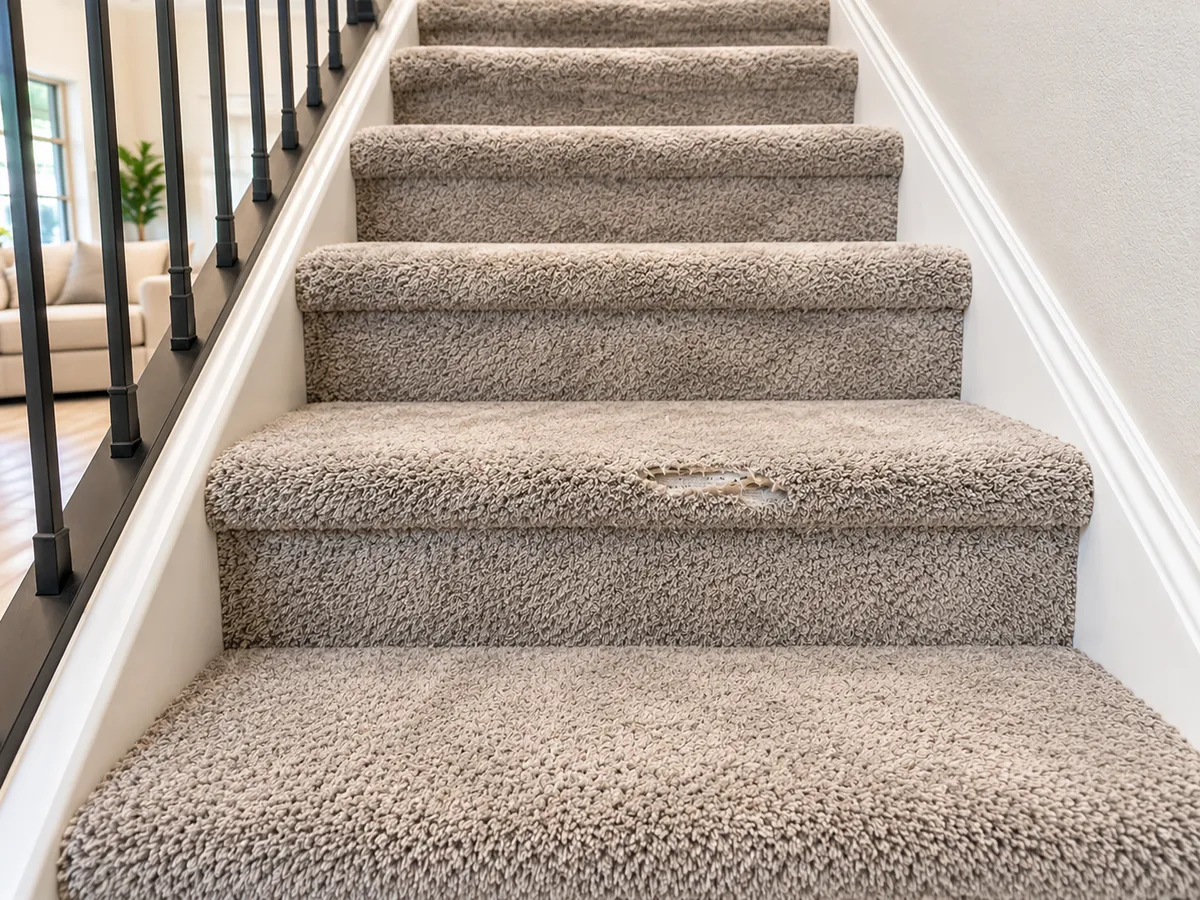
Carpet Repair Henderson repairs worn noses, chewed treads and loose carpet one step at a time. We re-stretch loose carpet, re-secure it into every step, and replace damaged treads with matching carpet. Most stair repairs are done in a few hours, so your stairs feel solid and look great again without the cost of recarpeting the whole staircase.
Common Problems We Fix
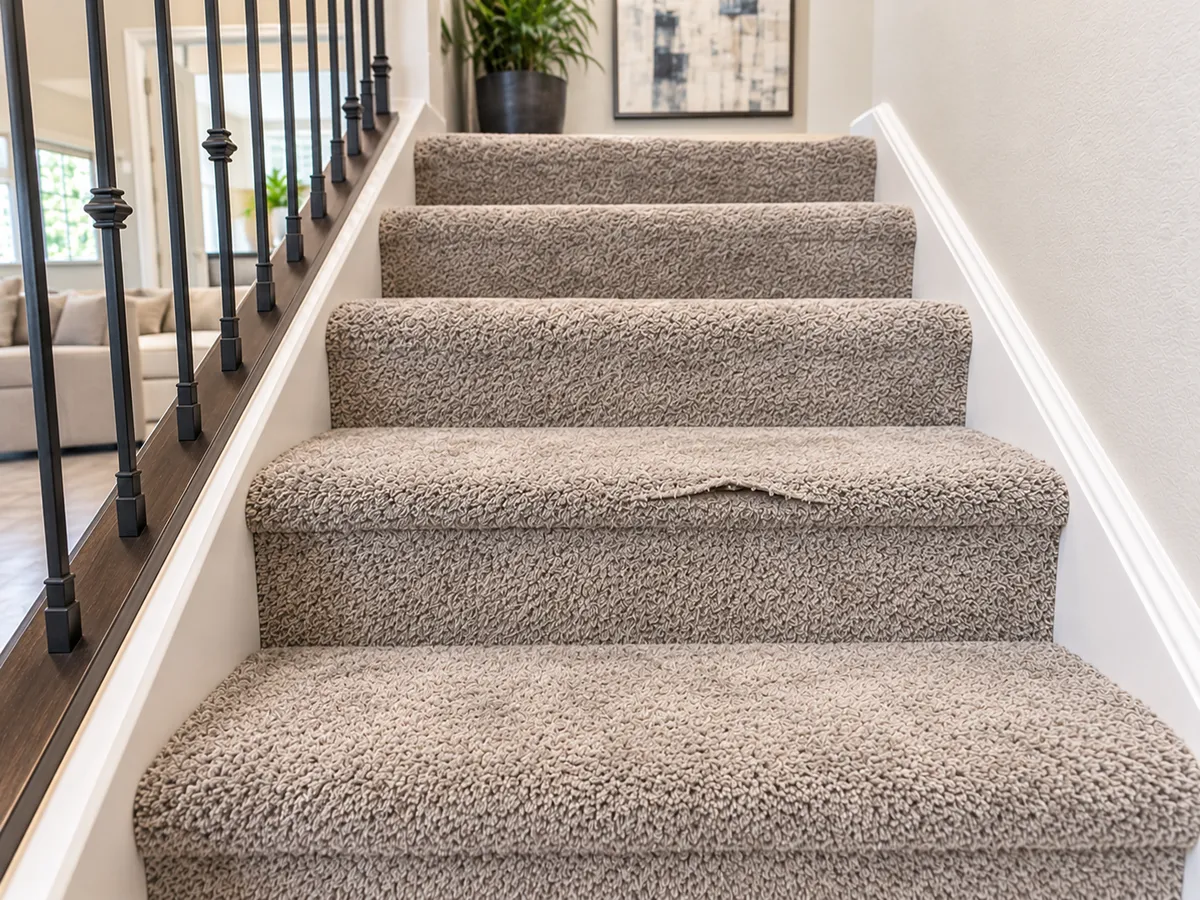
Loose stair carpet: Carpet that shifts, slides or pulls away from the steps, creating a real slipping hazard.
Worn stair noses: Front edges of the steps that have worn thin or down to the backing from daily foot traffic.
Pet damage on steps: Treads and edges that have been chewed by dogs or clawed by cats.
Frayed or split seams: Seams on stair landings or between steps that have started to separate or unravel.
How We Fix It
First, we inspect each step to find what’s loose, worn or damaged, so we only fix what needs fixing. For loose carpet, we pull it tight and re-secure it into the crease where each tread meets the riser, then re-staple it so it stays put. For worn or damaged steps, we replace the carpet on just those steps with a matching piece, wrapping it neatly around the nose so it blends with the rest of the staircase. Finally, we check every step to make sure it feels solid and secure underfoot.
What To Expect
Most stair repairs take a few hours, depending on how many steps need work. You can use your stairs as soon as we’re done, and we clean up before we leave. We’ll walk through the staircase with you first and give you a clear price upfront, so you know exactly which steps we’re fixing and why. When we finish, your stairs will look even, feel secure, and be safe for your whole family.
Why Stair Carpet Wears Out First and How Repair Keeps It Safe
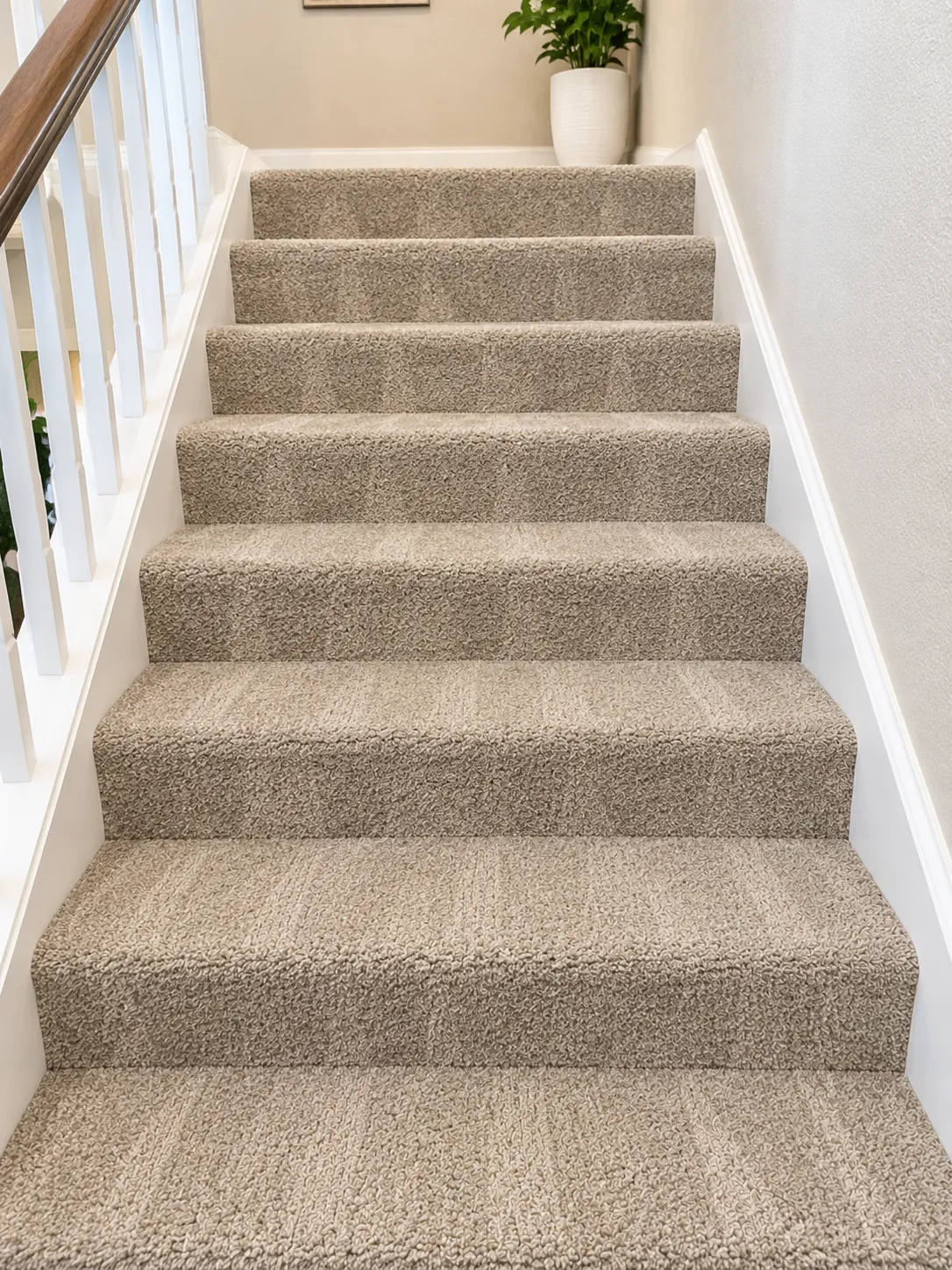
Stairs take more wear than any other carpeted spot in your home. Every step lands on the same small area, so the front edge of each stair, called the nose, often wears thin long before the rest of your carpet. Stair carpet also has to be wrapped and secured on every single step, either tightly around the nose in what’s called the Hollywood style or dropped straight down in the waterfall style. When that carpet loosens, it can shift underfoot and become a real slipping hazard, especially for kids, older family members and pets. The good news is that stairs don’t have to be redone all at once, because loose carpet can be re-secured and damaged steps can be fixed one at a time.
Carpet Repair Henderson has been repairing stairs across Henderson and Las Vegas for 10 years, and we know how to make every step safe and secure again. We pull loose carpet tight and lock it firmly into the crease of each step, so it stays put. When a step is worn or damaged, we replace just that step with matching carpet and wrap it neatly to blend with the rest of your staircase. You’ll get honest advice about what really needs fixing, clear pricing upfront, and careful work that saves you the cost of recarpeting your whole staircase.
Make Every Step Safe Again
If your stair carpet is loose, worn at the edges or damaged by pets, Carpet Repair Henderson can tighten it up and fix just the steps that need it, without recarpeting the whole staircase. Getting started is easy: snap a photo of your stairs and send it our way for a free, clear estimate.
Frequently Asked Questions
How do professionals put carpet on a staircase?
There are two main methods. The Hollywood method tightly wraps the carpet over the edge of the tread and around the nosing of each step, then fastens it on the riser for a clean, contoured look. The waterfall method is simpler: the carpet is attached at the edge of the tread, then dropped straight down to the next tread without being secured to the riser. Either way, the carpet has to be stretched tight and secured on every step so it stays put.
What’s the right way to measure my stairs for carpet?
For each step, measure the width of the stair, the depth of the tread, and the height of the riser. If you’re using the Hollywood (French cap) method, also measure the bottom of the nose and add it to the length of the step. Multiply by the number of steps, then add extra for trimming and for any landing at the top or middle of the stairs.
What does it usually cost to carpet a set of stairs?
Angi reports that the average cost to carpet stairs is $400, with a typical range of $300 to $650, or $14 to $36 per step, and most homes have between 13 and 16 steps. Spindles add to the price too, since stairs with spindles can cost anywhere from $2 to $15 more per spindle.
What should I know before pulling carpet off my stairs?
Stair carpet is held on with tack strips and lots of staples, so removal takes patience, and heavy gloves are a must. Check underneath first, because builders commonly recreate the look of full hardwood steps by installing hardwood pieces only on the edges. If the treads turn out to be plywood or rough lumber, they’ll need to be covered rather than refinished.
Which kind of carpet holds up best on stairs?
A synthetic nylon carpet may be your best bet for safety, stain resistance and strength on stairs. Choose a short, dense pile, because a low, dense pile is the most forgiving on stairs, hiding footprints and vacuum marks and not flattening underfoot. The padding matters too. Experts at the Carpet and Rug Institute suggest padding no more than 3/8 inch thick with 8 pounds density under stair carpet.
What’s the best way to clean carpeted stairs?
Vacuum each step often with a handheld vacuum or hose attachment, paying extra attention to the front edges and the corners where dirt builds up. Spot-clean spills right away by blotting, not rubbing. For a deeper clean, don’t soak the stairs, because over-wetting carpet during cleaning can cause delamination, where the carpet separates from its backing. A professional cleaning can reach the dirt that gets ground into the edges of each step.
How can I keep my stair carpet from wearing out so fast?
Stairs get heavy traffic, so the front edge of each step wears out first. Regular vacuuming keeps grit from grinding down the fibers, and taking shoes off at the door helps a lot. The pad matters too, since a dense underlay extends the life of your carpet and protects the fibers from being crushed on the step edge.
Is it okay to put a stair runner over existing carpet?
It can work, depending on your carpet. Low-pile carpet with secure attachment is generally suitable for a runner laid over it, while thick plush or loose carpet usually requires removal. Choose a thin, low-pile runner, because movement risk increases with pile height differences and runner thickness. The runner must be fastened securely on every step, and we can look at your stairs and tell you whether it’s a good idea.
The carpet on my stairs is coming loose. How do I fix it?
Loose stair carpet is a safety hazard, so it’s worth fixing right away. The fix is to pull the carpet tight again and re-secure it into the crease where each tread meets the riser. On every step, you want a tight seam with the carpet firmly taut in the tack strip and tucked into the seam. We re-stretch and re-staple loose steps so your stairs feel solid and safe again
Can I stop my stairs from squeaking without tearing up the carpet?
Often, yes. Squeaks usually come from a loose tread rubbing against the stair frame. Special squeaky floor repair kits send a snap-off screw right through the carpet without damaging the fibers, into the stringer or riser nearest the squeak. Be careful drilling, since there could be pipes or wires nearby. If the carpet is already coming up for a repair, that’s also a great time to fix squeaky treads underneath.

Carpet Repair Henderson
Phone: (725) 338-4482
Email: i[email protected]
Service Area: Henderson & Las Vegas, Nevada
Hours: Mon-Sat: 8:00am-5:00pm

© Copyright 2026. | Carpet Repair Henderson | All rights reserved.