

Clean Edges: Carpet Transition & Doorway Repair in Henderson, NV
Our carpet transition & doorway repair in Henderson, NV, fixes frayed doorways and loose strips, so your carpet meets tile and wood cleanly
10+ Years of Experience
Repair Instead of Replace
Seamless Carpet Matching
Free Photo Estimates
Is The Carpet Fraying Where It Meets Your Tile In The Hallway?
Has a metal transition strip come loose and started catching your toes?
Did your new wood floors leave a rough, unfinished edge next to the carpet?
Has your cat clawed the carpet into shreds at the bedroom doorway?
Worried someone will trip on the lifted carpet edge by your kitchen?
Is the carpet pulling away from the strip every time the door swings?
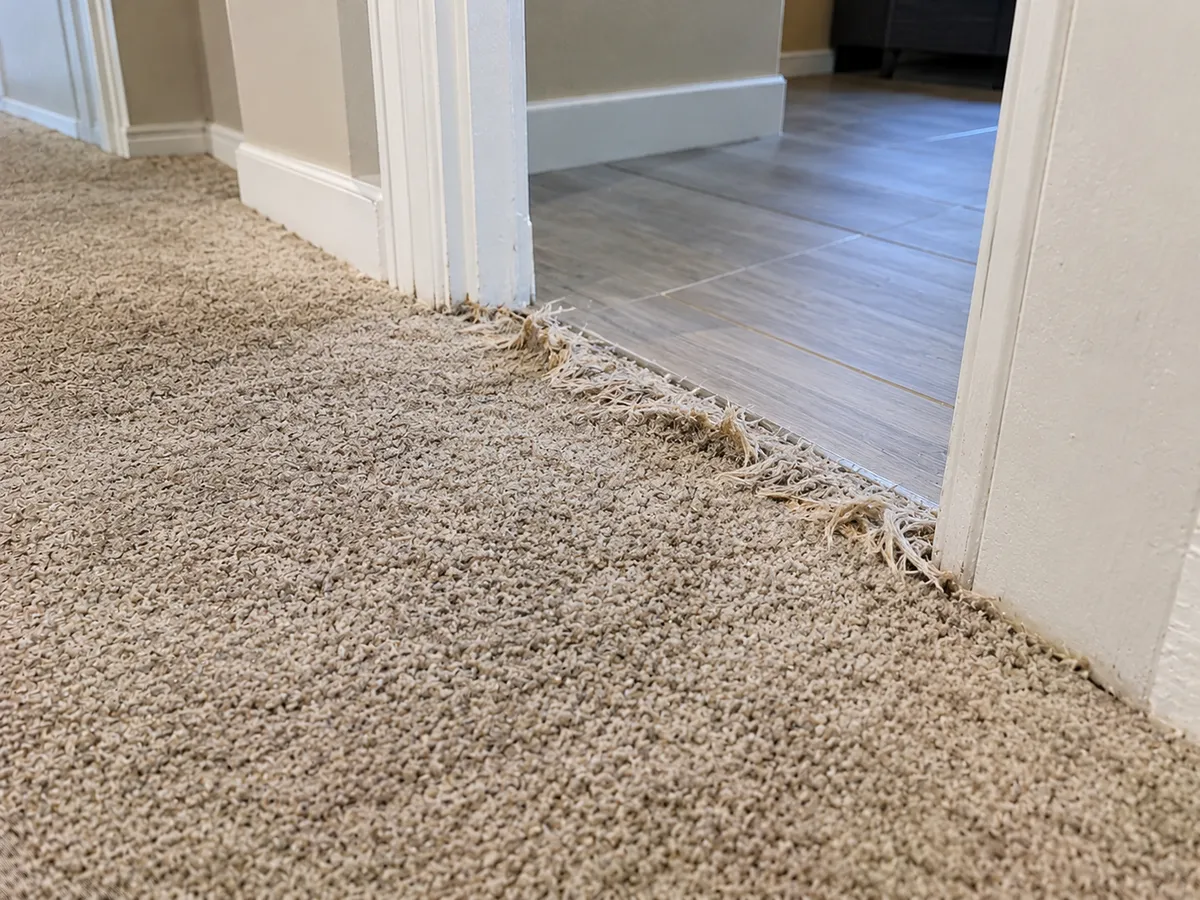
Carpet Repair Henderson Makes Doorways Safe With Carpet Transition & Doorway Repair
Carpet Repair Henderson fixes frayed doorways, loose strips and rough edges where carpet meets tile, wood or LVP. We trim the worn edge, patch any damaged carpet, and secure it with the right Z-bar or transition strip for your floors. Most doorways are done in a single visit, leaving you with a clean, tight edge that won’t catch toes.
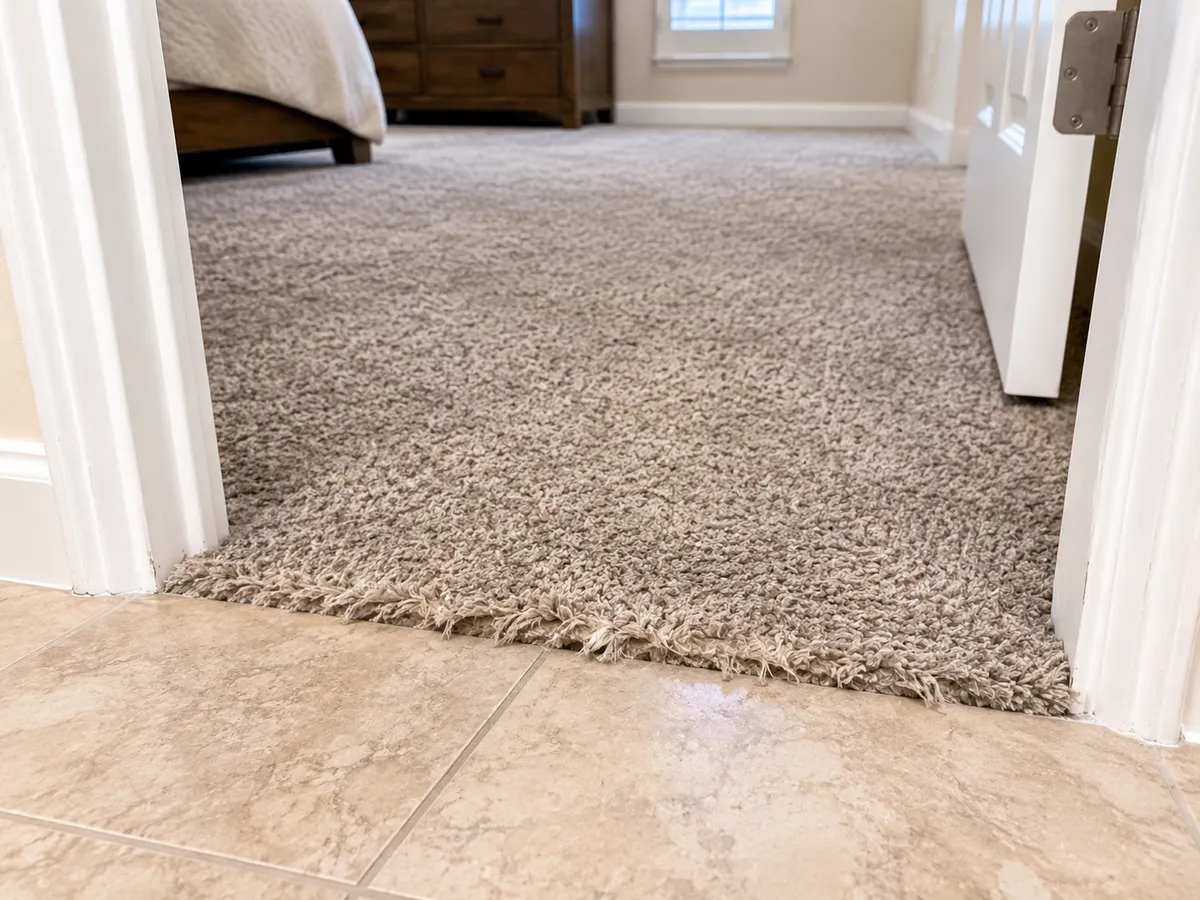
Common Problems We Fix
Frayed doorway edges: Carpet that’s unraveling where it meets tile, wood or LVP, often from foot traffic or pets scratching at the door.
Loose or broken transition strips: Metal or wood strips that have lifted, cracked or come loose and now catch toes.
Unfinished edges after new flooring: Rough gaps left behind when hard floors were installed next to existing carpet.
Uneven floor heights: Doorways where a height difference between floors creates a lip that’s easy to trip over.
How We Fix It
First, we check your floor heights and the condition of the carpet edge to choose the right fix. Then we trim away the frayed or damaged carpet and patch in matching carpet if the edge needs rebuilding. Next, we install or re-secure the right transition for your floors, like a Z-bar for tile, a reducer for uneven heights, or a strip that won’t be nailed through floating LVP. Finally, we stretch the carpet tight and lock the edge into place, so it lies flat right under where the door closes.
What To Expect
Most doorway repairs take less than an hour, and if you have several doorways, we can usually fix them all in one visit. You can walk across the doorway as soon as we’re done. We’ll explain which transition works best for your floors and give you a clear price before we start. When we leave, every doorway will have a clean, secure edge that looks finished and keeps your family safe.
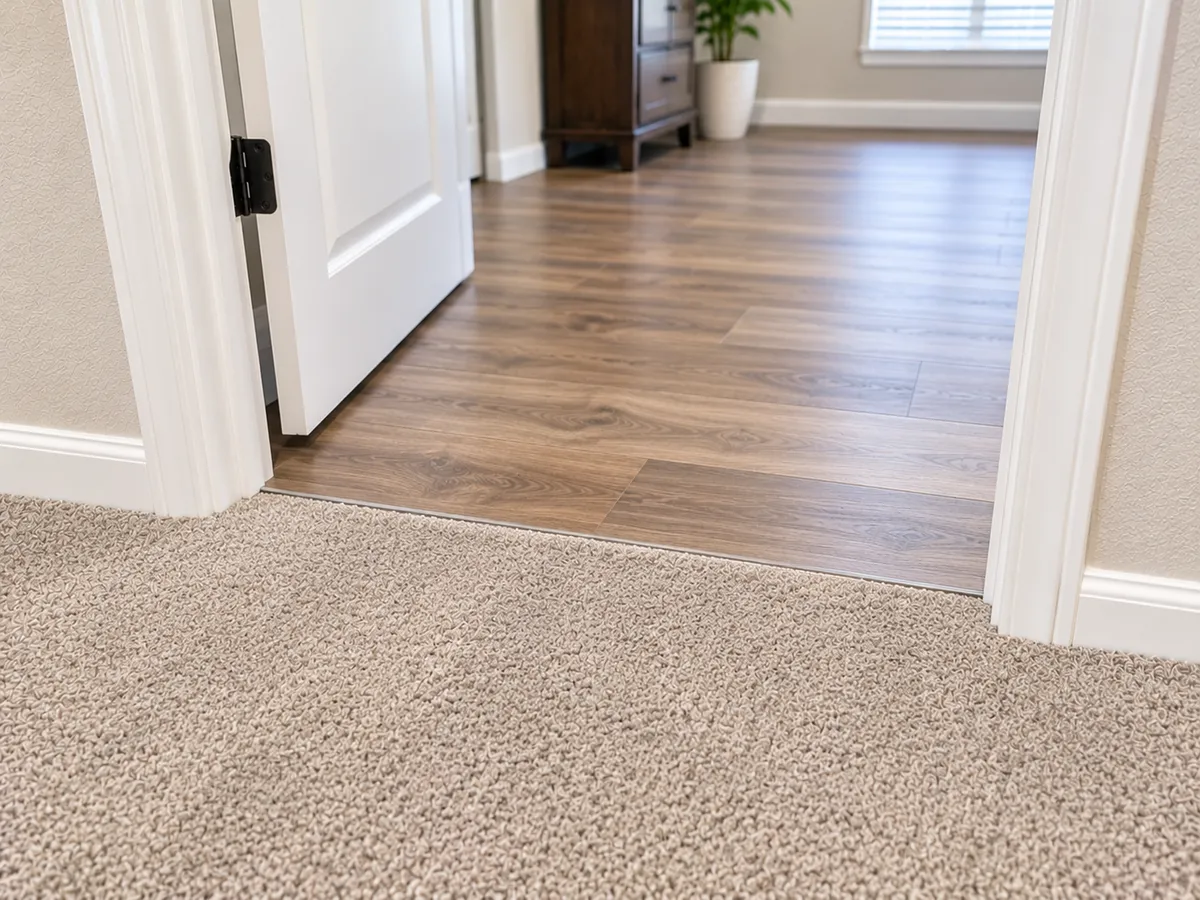
Why Doorways and Transitions Need Extra Care
The spot where carpet meets tile, wood or vinyl is one of the hardest-working edges in your home. Every person and pet who walks through puts pressure on it, and a cut carpet edge left without the right finish will start to fray and unravel. Transition strips solve this by holding the carpet edge tight, covering the raw edges of both floors, and smoothing out any height difference between them. When a strip comes loose, it can act like a lever, slowly pulling up the carpet or damaging the floor beside it. The right fix also depends on your floors, since a Z-bar works well with tile, a reducer handles uneven heights, and floating floors like LVP shouldn’t be nailed through.
Carpet Repair Henderson has been fixing doorways and transitions across Henderson and Las Vegas for 10 years, and we know there’s no one-size-fits-all strip. We look at your floor types and heights first, then choose the transition that will keep your carpet secure and your doorway safe. We line up each transition so it sits right under the closed door, keeping it out of sight and giving every room a clean edge. With honest advice, clear pricing and careful work, you get doorways that look finished and stay that way.
Give Your Doorways A Clean, Safe Edge
If your carpet is fraying, lifting or pulling loose where it meets tile, wood or LVP, Carpet Repair Henderson can secure it with the right transition so every doorway looks finished. Getting started is simple: snap a photo of the doorway and send it our way for a free, no-pressure estimate.
Frequently Asked Questions
How can I tell if there’s hardwood under my carpet?
Start by checking hidden spots, like inside a closet or around a floor vent, where the carpet edge isn’t tacked down and you can peek underneath. Check more than one room, since one spot doesn’t tell you about the whole house. Keep in mind that hidden hardwood is more common in older homes than in newer ones. If you’re worried about pulling the carpet loose, we can lift a corner for you and stretch it back into place afterward.
How is a transition strip put in between carpet and another floor?
The strip is measured and cut to fit the doorway, then trimmed around the door jamb so it lies flat. The base is secured to the floor, and the carpet is stretched tight before its edge is tucked or locked into place. Getting the carpet tight first is the key to a transition that stays flat and lasts.
What’s a Z-bar, and why do carpet installers use it?
A Z-bar is a metal strip shaped like the letter Z, and it’s one of the most common ways to join carpet to tile. It covers the raw edges of the cut tile, stops the cut carpet from fraying, and acts as a carpet gripper across the doorway, which helps keep the carpet under tension and avoids ripples. It’s one of the cleanest-looking ways to finish a doorway.
How do you finish the edge where carpet meets luxury vinyl plank?
The right fix depends on the height of each floor. Common options are T-molding, a reducer, or a carpet gripper paired with a transition strip, and a carpet gripper with a metal or vinyl strip secures the carpet and hides the edge. LVP is usually a floating floor, so the strip shouldn’t be nailed through it. We secure the carpet side and make sure the edge sits flat and safe.
My transition strip is loose or broken. Can it be repaired?
Yes, and it’s worth fixing soon. A loose strip acts like a lever, slowly pulling up the carpet or cracking the edge of your wood floor. We can re-secure or replace the strip and re-tuck the carpet edge so your doorway looks clean again.
Do I really need a transition strip between my carpet and hard floor?
In most cases, yes. Transition strips smoothly join floors that are different heights and protect flooring edges from foot traffic. Without one, the height change between floors can catch toes and become a tripping hazard. A good transition keeps your doorway safe and gives each room a finished look.
Can I use a marble threshold where my carpet meets tile?
Yes. A marble threshold offers a durable and elegant way to transition from tile to carpet at a doorway. The threshold is usually set as part of the tile work. Once it’s in, we can stretch and tuck your carpet tightly against it so the edge looks finished and won’t unravel.
Where exactly should a transition strip sit in a doorway?
The goal is for the threshold to lie directly under the closed door, so you only see it when the door is open. Typically, it lines up with the door jamb. This keeps the transition hidden and gives each room a clean edge.
What’s a reducer strip, and when would I need one?
A reducer strip bridges the gap between two floors and creates a slope from the taller floor to the lower one. It’s used when your floors aren’t the same height, like thick tile next to thinner carpet or vinyl. It creates a smoother transition and helps avoid tripping hazards.

Carpet Repair Henderson
Phone: (725) 338-4482
Email: i[email protected]
Service Area: Henderson & Las Vegas, Nevada
Hours: Mon-Sat: 8:00am-5:00pm

© Copyright 2026. | Carpet Repair Henderson | All rights reserved.